 |
| Hazelnut seen on a neighborhood walk. |
Wednesday, October 2, 2019
Wind Down
While the Land Scouts will continue, for the time being this blog will not. It will remain up as an archive and resource. Thanks to everyone who followed along and participated in Land Scouting.


Tuesday, June 26, 2018
Notre Dame Land Scouts
Spring flew by and I've been lucky to land scout with a couple groups in the area. Among my favorite were the 4th graders at Notre Dame Elementary School in De Pere. The school art teacher Virginia Janssen brought me over two days as a visiting artist.
On our first day together we had a great time binding field books and getting outside to take notes and draw. Fortunately for us, that visit was just before some late spring snow showers.
On our second day we made seedballs with a mix of Midwestern wildflower seeds. (I get the seeds from American Meadows.) Every student filled an egg carton full of their hand rolled seed balls.
At the end of the second day I was thrilled to award Observation badges to several students who'd filled their field books. It was a blast to talk with the 4th graders about Land Scouts and to share in their excitement to make things and get outside.
Thanks to Virginia Janssen for having me out!
On our first day together we had a great time binding field books and getting outside to take notes and draw. Fortunately for us, that visit was just before some late spring snow showers.
 |
| Notre Dame students taking note and drawing about the grounds of their school. |
On our second day we made seedballs with a mix of Midwestern wildflower seeds. (I get the seeds from American Meadows.) Every student filled an egg carton full of their hand rolled seed balls.
 |
| We use an assembly line method to make seedballs. Here a student is adding seeds to his partially formed pieces. |
Thanks to Virginia Janssen for having me out!
 |
| One of the classes with their newly earned Observation badges! |
Friday, January 12, 2018
Morristown Land Scouts
Congratulations to the Land Scouts of Morristown, TN. Started this fall and led by Davina, this group earned their Observation, Orientation, Germination, and Digestion badges. Fantastic!
Below are a few images from the troop in action. Congratulations all! I look forward to seeing what you do in 2018.
Below are a few images from the troop in action. Congratulations all! I look forward to seeing what you do in 2018.
 |
| A scout noting things in a field book. |
 |
| A scout deep in a field book. |
 |
| Scouts taking in the horizon. |
 |
| Some field book notes on germination. |
 |
| Some field book notes on planting. |
 |
| Land Scouting walk |
 |
| Learn from good guides! |
 |
| Early stages of bean germination. |
 |
| Germination leads to growth! |
Sunday, December 3, 2017
Persimmons
Congratulations to Amy and her family who've cared for this persimmon tree for the last seven years. Habitation badges will be headed their way soon! (A side note that you can earn your Habitation badge in just one short year.) Amy got the tree from the genesis exhibition of the Land Scouts (née Urban Land Scouts) at UT's Downtown Gallery in Knoxville, TN. She reports that it's yet to bear fruit. When it does, they can earn their Propagation badges as well.
 |
| Photo by Amy Hubbard |
Wednesday, June 7, 2017
Leopold's Land Ethic
When we moved to Wisconsin four years ago it was a chance for me to practice what I preach: I became a beginning Land Scout and started a field book to document the new land around me. Summer gave way to fall and fall slid into real winter. Then glorious spring and summer again. Several seasonal cycles later and I've just this month finished my first Wisconsin field book (shown at the end of this post).
I didn't know it when I made the Land Scouts, but much of what the group values and practices comes from American biologist Aldo Leopold. In particular, Leopold's "land ethic" is the root of modern environmental ethics and wildlife conservation. Much of his formative work took place in Wisconsin and he is a beloved adopted son of the state. Even today the Aldo Leopold Foundation carries on Leopold's work through robust programming and educational opportunities.
Last week the Land Scouts came full circle when I got to partner with with middle schoolers at Aldo Leopold Community School in Green Bay as part of their Exploratory Week. How cool to get to work at a progressive public school named in honor of the man whose work left such an important legacy of land stewardship! A group of ten 4th - 8th graders and language arts teacher Jaime Danen joined me in binding field books, exploring, observing, noting, and reflecting. We also played some great games.
We got to explore some of the school grounds, two beautiful public parks, and, with the help of biologist Carrie Kissman, the nearby Fox River. It was a treat to work with these students. I was particularly excited discover and note the plants coming up in our area. Here's a list of some of the plants we saw:

I hope the students will complete their field books and turn them in for their Observation badges (now in their second edition of production). Thanks to Aldo Leopold Community School, Jaime Danen, Carrie Kissman, and the generations of Wisconsin environmentalists and conservationists whose work prepared the way for us. I hope we can work together again.
I didn't know it when I made the Land Scouts, but much of what the group values and practices comes from American biologist Aldo Leopold. In particular, Leopold's "land ethic" is the root of modern environmental ethics and wildlife conservation. Much of his formative work took place in Wisconsin and he is a beloved adopted son of the state. Even today the Aldo Leopold Foundation carries on Leopold's work through robust programming and educational opportunities.
 |
| Testing out newly bound field books on campus. |
 |
| Warming up with balance games at Baird Creek Park |
We got to explore some of the school grounds, two beautiful public parks, and, with the help of biologist Carrie Kissman, the nearby Fox River. It was a treat to work with these students. I was particularly excited discover and note the plants coming up in our area. Here's a list of some of the plants we saw:

I hope the students will complete their field books and turn them in for their Observation badges (now in their second edition of production). Thanks to Aldo Leopold Community School, Jaime Danen, Carrie Kissman, and the generations of Wisconsin environmentalists and conservationists whose work prepared the way for us. I hope we can work together again.
 |
| Semi-solo drawing in field books at Bay Shore County Park |
 |
| Examining aquatic organisms pulled from the Fox River under the guidance of biologist Dr. Carrie Kissman |
 |
| Observing at the creek in Bairds Creek Park |
 | |
|
Tuesday, January 10, 2017
Figure, Ground
The last time I posted here it was summer and things were muscular and bright in the garden. Now it's full on winter and the garden is full of dried stalks and wilted stems. The lake freezes and thaws. In terms of Land Scouting, it can be harder to get outside; the days are shorter and you've got to dress for the weather to be comfortable for longer than a short walk. While it can be uncomfortable to be cold, I think we tend to speak ill of winter too often. We focus on the lack of light, warmth, and movement, rather than reveling in what the dark, cold, and stillness do.

What they do is create negative space in the cycle of the seasons. Biologically many plants in our area need a period of winter to go into dormancy or to germinate seeds for the spring. In design class we talk about negative space and how a "positive" figure is set off by a "negative" ground. You can think of negative space as the area around something or that which is not filled. Often successful design work had negative space that does as much as, if not more than, the positive figures like text or images. One of my teaching mentors talked about the importance of negative space in one's life: time unscheduled and unscripted. Too much of one and not the other creates a loud imbalance. This time resets the world, physically and mentally, and grounds the coming buds and blossoms. We need the rest and stillness of winter to appreciate the abundance and movement of summer.
So rather than curse the cold, short, dark days (or maybe you don't do this...) let's sit comfortably and patiently in winter, cultivating hygge as needed, as our half of the planet tilts back toward the sun.

What they do is create negative space in the cycle of the seasons. Biologically many plants in our area need a period of winter to go into dormancy or to germinate seeds for the spring. In design class we talk about negative space and how a "positive" figure is set off by a "negative" ground. You can think of negative space as the area around something or that which is not filled. Often successful design work had negative space that does as much as, if not more than, the positive figures like text or images. One of my teaching mentors talked about the importance of negative space in one's life: time unscheduled and unscripted. Too much of one and not the other creates a loud imbalance. This time resets the world, physically and mentally, and grounds the coming buds and blossoms. We need the rest and stillness of winter to appreciate the abundance and movement of summer.
So rather than curse the cold, short, dark days (or maybe you don't do this...) let's sit comfortably and patiently in winter, cultivating hygge as needed, as our half of the planet tilts back toward the sun.
Tuesday, July 19, 2016
Summer Shots
Some photos of flowers and things in the garden now. We're zone 5a/b and on Lake Michigan.
 |
| Benary's Giant Zinnia |
 |
| Egyptian Walking Onion bulblets |
 |
| Raspberries |
 |
| Resina Calendula |
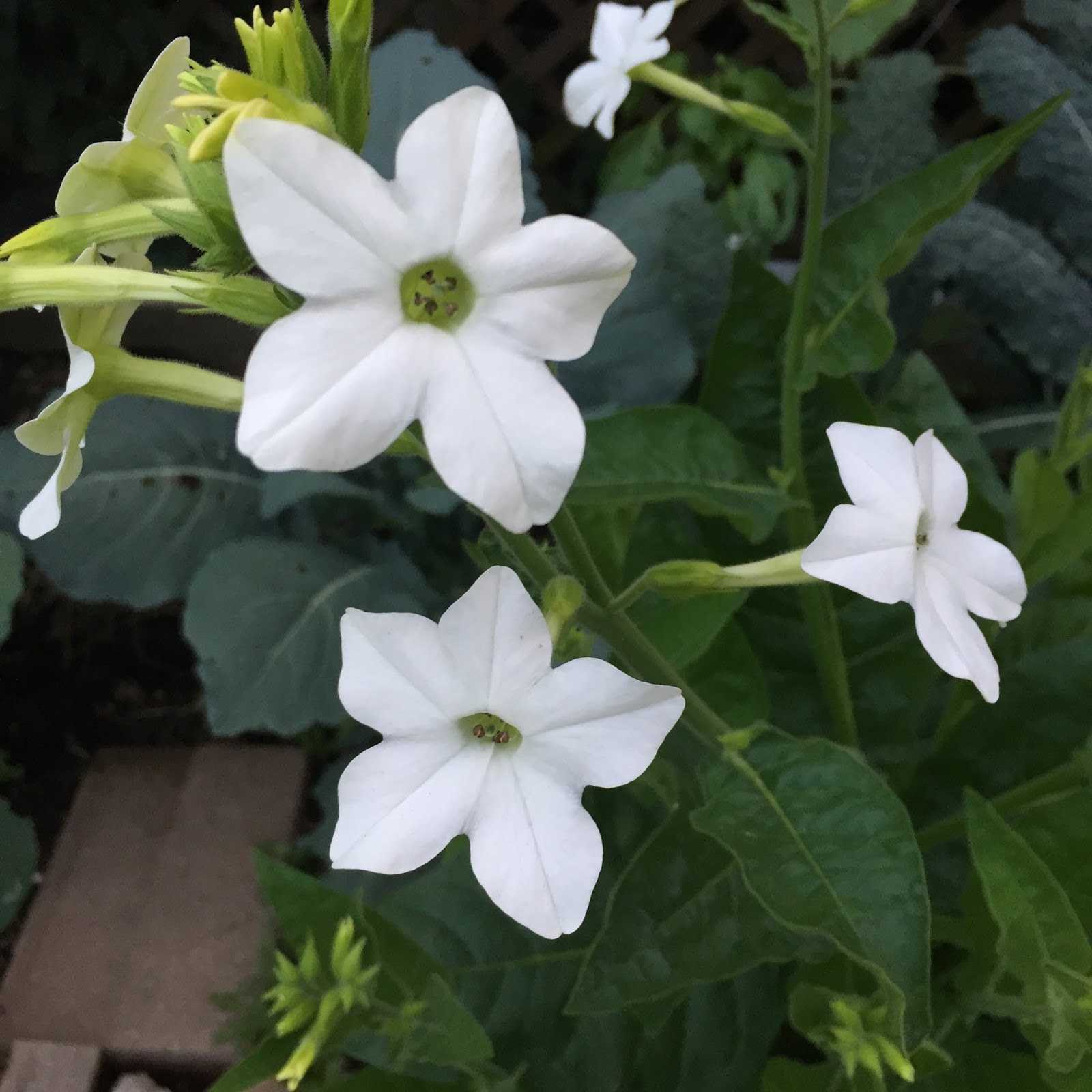 |
| Flowering Tobacco (Nioctiana alata) |
Thursday, June 30, 2016
New Land
 |
| A roadside gully on a hill |
 |
| White blossoms, pale green stems, slightly furry, 8-10" tall clumps |
 |
| Four containers with small plants. In the background, the Sawtooth Mountains |
May you be generous and giving with each other.
May your sense of humor and playful spirit always continue to enliven your relationship.
May you always respect the diversity of humankind.
May you act with compassion to those less fortunate and with responsibility to the communities of which you are a part.
May you appreciate and complement each other's differences.
May you always share yourselves openly with your friends and family.
May your home be a haven of blessing and peace.
Tuesday, May 10, 2016
Go Wild Outside
I follow Fiona Bird on twitter where she’s often posting photos of seaweed, news about foraging, and generally interesting tidbits about land and plants. Bird tweeted about reviewing her book Let Your Kids Go Wild Outside (CICO Books), I contacted the publisher, received a copy in the mail, and have thoroughly enjoyed it.


This book is refreshing. The writing is bright, abundant, and inviting. It offers a lot of information and activities, but it doesn’t belabor the learning outcomes and educational values of the outdoor experience. Instead the emphasis is on discovery, play, and trusting the reader’s curiosity to guide her. Each chapter covers a different region: woods; meadows, hedgerows and hills; seashore; water and wetlands; and “my wild garden and kitchen.”
For each Bird gives information about the flora and fauna you’ll find, instructions for crafts to make with local plants and found materials, a little bit of natural history, and activities appropriate to the area. Almost all of the crafts and activities are free and made largely with biodegradable materials that can be returned to site when finished. Although most of the activities are appropriate for younger children (some with supervision), older children and adults will find plenty to try. I’m especially excited to try making nettle cordage and artist’s charcoal from pussy willow branches!
For each Bird gives information about the flora and fauna you’ll find, instructions for crafts to make with local plants and found materials, a little bit of natural history, and activities appropriate to the area. Almost all of the crafts and activities are free and made largely with biodegradable materials that can be returned to site when finished. Although most of the activities are appropriate for younger children (some with supervision), older children and adults will find plenty to try. I’m especially excited to try making nettle cordage and artist’s charcoal from pussy willow branches!
This book would be a helpful resource for outdoor educators or indoor educators wanting to get their students outside more. Likewise it would be a thoughtful gift for any young naturalist moving to (or vacationing in) new areas. In fact I plan to getting a second copy for some young family friends. My hat goes off to Bird for this thorough and accessible book. I look forward to returning to it as spring finally comes to Wisconsin.
Friday, March 25, 2016
Seeding towards spring
The vernal equinox was a couple of days ago, which means it's technically spring. You wouldn't know it to look out the window yesterday: snow, snow, wind, and more snow. Still, when all this snow melts (and it will) there are things budding up. I've seen garlic, peonies, and chamomile in our garden. The weeping willows have their early yellow buds and eventually the other trees will come budding along too.

In the meantime: I'm starting seeds indoors. Where I live the estimated last frost is early May. I've marked backwards on my calendar from there and am started different varieties accordingly. Many need 6-8 weeks indoors. The seeds going in the photo above are kept cozy by an electric heating mat. Even the seeds of cool-weather crops like kale or celery will germinate faster with warmer soil temperatures.
If you'd like to start seeds indoors but have never done it before, start with easier varieties. For example vegetables like spinach or tomatoes and flowers like nasturtium or sunflowers. Google "seed swap" + "your location" to see if you can find someone in your area who will give you some of their seeds. Feel free to download, print out, and use this seed packet template. Seeds will be marked with a year, and although it's generally good to use more recent seeds, if they've been stored in a cool, dry, dark place, you may have luck with seeds 5 years or older. (If you do use older seeds, assume that fewer will germinate and plant more.)

I'm not going to go over all the specifics for starting seeds here because many wonderful and more experienced growers have covered the process at length here, here, and here. My only advice: Don't overwater your seeds! Know that while you can go out and spend as much money as you'd like to build a fancy set-up with grow lights, timers, and heat mats, you can also get pretty good results with a sunny window, well cleaned leftover plastic food containers, and careful attention.
The thrill of seeing those first tiny bits of green pushing through black soil is unparalleled. Once you get the hang of starting plants from seed, you'll have more than you know what to do with. Another opportunity to trade with fellow growers. Good luck and happy spring!

In the meantime: I'm starting seeds indoors. Where I live the estimated last frost is early May. I've marked backwards on my calendar from there and am started different varieties accordingly. Many need 6-8 weeks indoors. The seeds going in the photo above are kept cozy by an electric heating mat. Even the seeds of cool-weather crops like kale or celery will germinate faster with warmer soil temperatures.
If you'd like to start seeds indoors but have never done it before, start with easier varieties. For example vegetables like spinach or tomatoes and flowers like nasturtium or sunflowers. Google "seed swap" + "your location" to see if you can find someone in your area who will give you some of their seeds. Feel free to download, print out, and use this seed packet template. Seeds will be marked with a year, and although it's generally good to use more recent seeds, if they've been stored in a cool, dry, dark place, you may have luck with seeds 5 years or older. (If you do use older seeds, assume that fewer will germinate and plant more.)

I'm not going to go over all the specifics for starting seeds here because many wonderful and more experienced growers have covered the process at length here, here, and here. My only advice: Don't overwater your seeds! Know that while you can go out and spend as much money as you'd like to build a fancy set-up with grow lights, timers, and heat mats, you can also get pretty good results with a sunny window, well cleaned leftover plastic food containers, and careful attention.
The thrill of seeing those first tiny bits of green pushing through black soil is unparalleled. Once you get the hang of starting plants from seed, you'll have more than you know what to do with. Another opportunity to trade with fellow growers. Good luck and happy spring!
Thursday, November 5, 2015
Plant Garlic

I love growing garlic. You plant it in the fall, right around first frost, giving it just enough time to grow roots but not so much time that it will put up a lot of growth that would be killed by the cold winter temperatures. Most of the fall chores for the garden involve pulling out spent plants and preparing beds for winter-- tucking garlic bulbs into the soil is a forward-looking exception.
The early rooting helps keep the bulb from being heaved out of the ground by freezing. Then the garlic waits under several inches of mulch through the winter. In the spring it will be one of the earliest things to come poking through the soil, green and hopeful. You can clip and use the slender curling scapes the hardneck garlic puts out in early summer. Harvest the garlic late in the summer when the stalks and fronds have begun to yellow. Let the heads of garlic dry in a cool dark place.
Monday, October 5, 2015
Team Worm
 |
| Upon arriving these young guys announced they were on "Team Worm." |
 |
| Anna and Alaina getting pumped for vermicompost. |
In fact, there's a lot of room for (and not much risk involved in) experimentation in home vermicomposting. My efforts pale in comparison to those Bentley Christie, self described Compost Guy and energetic cheerleader for worms, vermicompost, and home experiments. If you're growing excited about these things, I recommend his website Red Worm Composting where he describes with great enthusiasm (and ample puns) various methods and techniques.
Onward, upward, and on into the coming winter. Next up in my Land Scouting: saving seeds before first frost and documenting the fruit trees in our neighborhood.
Wednesday, May 20, 2015
Bee Birth
Update: video has been removed from youtube but you can watch it here.
This stunning video comes from a collaboration between photographer Anand Varma and a honey bee research facility at UC Davis. I've read some articles (none of which I can find and link to now) suggesting that caring for small creatures (like insects) can increase demonstrated empathy in children. This video suggests a possible correlation to that: considering or witnessing organisms as "babies" making us more inclined to think positively or protectively of them.
In his TED talk below, you can hear Varma talk about the assignment that led him to keep and document bees and specifically the mites that threaten bees. This work is also an excellent example of how visualization (art, design, alternative presentations of information) can elevate our understanding of complex ecological systems and situations.
This stunning video comes from a collaboration between photographer Anand Varma and a honey bee research facility at UC Davis. I've read some articles (none of which I can find and link to now) suggesting that caring for small creatures (like insects) can increase demonstrated empathy in children. This video suggests a possible correlation to that: considering or witnessing organisms as "babies" making us more inclined to think positively or protectively of them.
In his TED talk below, you can hear Varma talk about the assignment that led him to keep and document bees and specifically the mites that threaten bees. This work is also an excellent example of how visualization (art, design, alternative presentations of information) can elevate our understanding of complex ecological systems and situations.
Sunday, April 12, 2015
 Like many of the creatures in NE Wisconsin, I've been holed up and not very active with Land Scouts social media. Spring is returning (I saw violets today!) and so too increased opportunities to discover our flora, fauna, and ecology.
I'm looking forward to sorting through my worm bins (which have filled up over the winter) and add the castings to the garden. (The image below comes from Nancy Mathias's outstanding vermicompost barrel. More on that later.) What are you doing to greet the spring?

Sunday, January 18, 2015
Seed Ball Production

I use this recipe to make seed balls:
7 parts clay powder, 5 parts sifted aged compost, 1 part fine grog (if available)
Mix compost and clay together dry, add in water gradually and work mixture until smooth, picking out any wood pieces from the compost.
Roll 1" ropes of the clay mix, pinch of 1" segments and lay them out. Indent them with your fingers to make a small bowl of each.
With clean and dry hands, portion out the seeds into the clay bowls.
Close bowls, roll in palms vigorously and carefully, rounding into a ball.
Leave to dry on cardboard out of direct sunlight. Store covered.
 |
| Seeds prior to being mixed together. |
Wednesday, November 26, 2014
Pond Gap Land Scouts
 |
| Cutting greens at Pond Gap Elementary School, Knoxville, TN |
This is the second year of Land Scouts at Pond Gap Elementary School in Knoxville, TN. I've had the pleasure of working first with Matt Callo and now with Elias Attea, both AmeriCorps VISTA Volunteers through Pellissippi State Community College's Service Learning program. Both have given good feedback on how the Scouts work and can be improved to serve Pond Gap's after school program. Below are badges now en route to Attea's troop.
 |
| From back to front: Decomposition, Digestion, Collection, Observation, and Propagation |
Thursday, November 20, 2014
the Guide Book!

Friday, July 18, 2014
In the Works
I've been working on a Land Scout Guide Book this summer. It includes general information about the scouts, instructions for earning the Observation badge, and a guideline for starting your own troop. And photos and drawings! Yee-haw. Shown here: a printed draft.
If you'd like to collaborate on the Land Scouts by hosting your own troop and/or giving thoughtful feedback on this book, be in touch and I'll send you a copy.

If you'd like to collaborate on the Land Scouts by hosting your own troop and/or giving thoughtful feedback on this book, be in touch and I'll send you a copy.
Tuesday, June 10, 2014
Hey now!
Last week I got an email from a woman at a Unitarian Church in Knoxville, TN. Seems someone had been helping themselves to the berries and vegetables from the church gardens planted "specifically...to provide food for the local WIC program and their food training program." When confronted about their harvesting the "foragers" (and picking from someone else's garden hardly qualifies as foraging) made reference to the Land Scouts' Knoxville Map.
Now listen here folks: foraging isn't just a fancy word for stealing. And if you're taking from somebody's garden without their permission, that's not foraging. That's stealing. So please don't do that. Or, if you insist in doing that, don't call yourself a Land Scout. That's not how we do.
Now listen here folks: foraging isn't just a fancy word for stealing. And if you're taking from somebody's garden without their permission, that's not foraging. That's stealing. So please don't do that. Or, if you insist in doing that, don't call yourself a Land Scout. That's not how we do.
 |
| Berries often grow wild and are easy to harvest without destroying the plant or taking all of them. |
Wednesday, May 21, 2014
Lake Flies!
Thanks to meteorologist @jefflast for pointing us to the phenomenon of lake flies hatching over Lake Winnebago. And thank you to the fine folks at National Oceanic and Atmospheric Administration for this 2009 animation showing us instead of telling us: there are a lot of these flies.
"Millions...potentially trillions." You can read more about the hatch on the noaa.gov site here.
At long last it is (somewhat consistently) warmer and over half the trees are leafing out. I look forward to discovering new flora and fauna as we head into our first full Wisconsin summer.

"Millions...potentially trillions." You can read more about the hatch on the noaa.gov site here.
At long last it is (somewhat consistently) warmer and over half the trees are leafing out. I look forward to discovering new flora and fauna as we head into our first full Wisconsin summer.
Subscribe to:
Posts (Atom)